Ancient Mediterranean Shipyards and Harbours

The Bronze Age port of Miletus, c. 2000 BC – c. 1200 BC

The Bronze Age port of Miletus (37°31′48″N 27°16′45″E, modern Balat, Turkey), known in Hittite archives as Millawanda, functioned as a pivotal cosmopolitan hub on the western Anatolian coast. Serving as a contested maritime bridgehead, it facilitated the exchange of goods between Minoan, Mycenaean, and Hittite civilizations. Miletus’s strategic importance lay in its ability to reconcile the palatial economies of the Aegean with Near Eastern land empires. However, this interconnectivity eventually made it a flashpoint for imperial rivalry and structural collapse. Its violent destruction, documented as Miletus V, exemplifies the widespread systemic crises that ended the Mediterranean’s interconnected geopolitical order circa 1200 BCE.

By Nick Nutter | Published: | Updated:

Visited 170 times

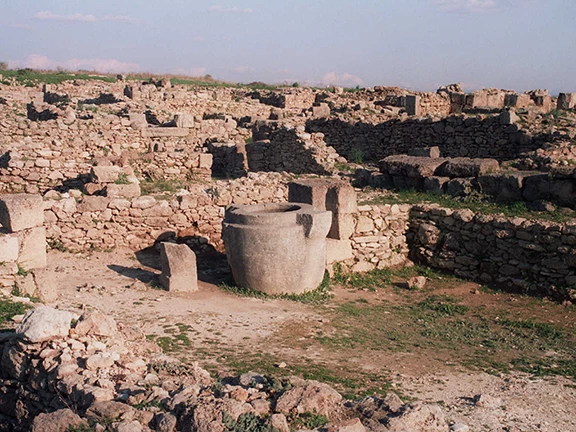
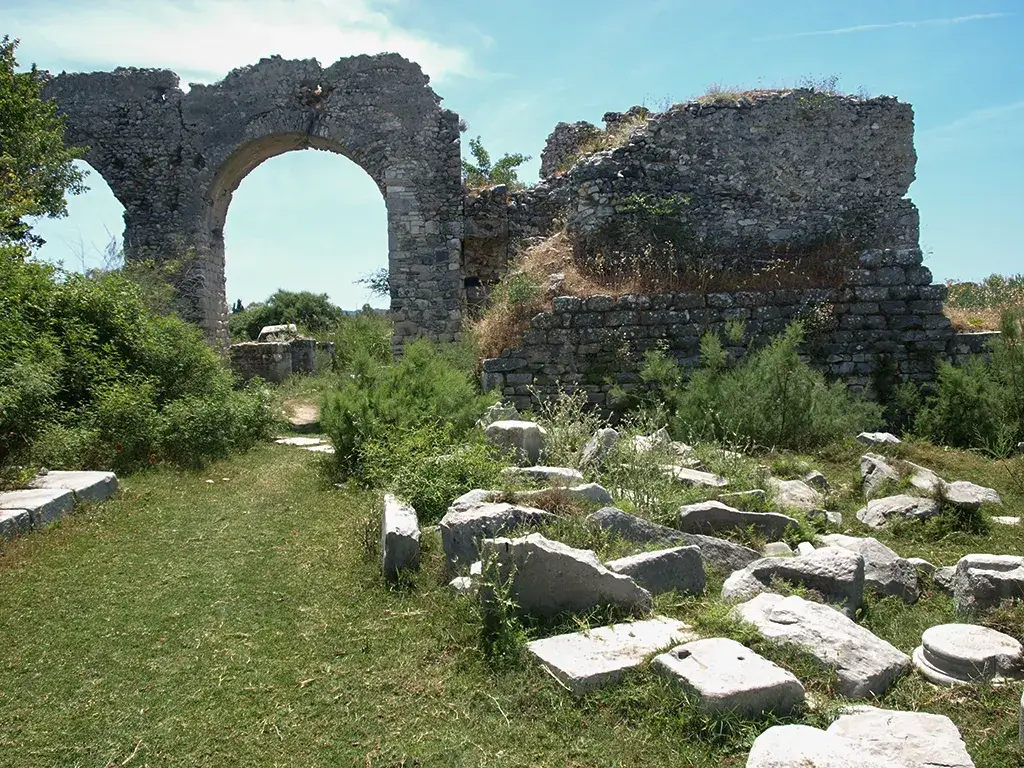
The Bronze Age port of Miletus, c. 2000 BC – c. 1200 BC - The ruins of Miletus
The ruins of Miletus

Miletus in the Bronze Age (c. 2000–1200 BCE): Geopolitical History

For much of antiquity, the Latmian Gulf on Anatolia’s western coast was one of the Eastern Mediterranean’s most important maritime corridors. At its mouth stood Miletus, a city ideally placed to connect the palatial economies of the Aegean with the great land empires of the Near East. Long before it became famous for Archaic philosophy or Hippodamian urban planning, Miletus had already established its geopolitical importance during the Bronze Age.

Minoan Influence and Maritime Trade Networks in Middle Bronze Age Miletus

The archaeological record shows that Miletus participated in long-distance exchange as early as the Chalcolithic period, but it emerged as a major international emporion in the Middle Bronze Age. By the 20th century BCE, the settlement, archaeologically designated Miletus I and II, displayed strong Minoan influence. Excavations have uncovered Minoan-style houses, frescoes, and large quantities of Kamares ware, pointing either to a substantial trading enclave or to a direct Cretan colony (Niemeier 1998).

Through Miletus, the Minoans could access the resources of inland Anatolia, especially timber and silver from the Taurus Mountains. Although Aegean palatial centres depended heavily on Cyprus (Alashiya) for copper, Miletus served as a redistribution hub where several trade routes converged (Knapp 2008). Cypriot copper, Anatolian silver, and Aegean textiles and oils passed through the port before being channelled onward to Crete and mainland Greece.

Mycenaean Expansion and the Establishment of Millawanda as an Ahhiyawan Bridgehead

After the collapse of Minoan palatial power around 1450 BCE, Miletus, now in its Miletus IV phase, came under Mycenaean influence. The site was strongly fortified with a defensive wall typical of mainland Greek citadels, and it appears to have functioned as an Ahhiyawan bridgehead on Anatolian soil, often backing local anti-Hittite revolts.

Under Mycenaean control, Miletus expanded its role in the redistribution of Mediterranean goods. Large quantities of Mycenaean pottery, together with local Anatolian wares and Levantine amphorae, reveal a cosmopolitan port frequented by merchants from Cyprus, the Levant, and the Aegean (Greaves 2002).

Hittite-Mycenaean Diplomatic Conflicts and Imperial Control

The c. 1315 BCE Sack of Millawanda by Hittite King Mursili II

The Late Bronze Age provides the first documentary evidence for the city, preserved in the archives of the Hittite capital, Hattusa. In these texts, Miletus appears as Millawanda (Bryce 2005). The tablets depict a politically unstable frontier in which Millawanda served as the main Anatolian base of the Ahhiyawa, a term widely understood to refer to the Mycenaean Greeks. Around 1315 BCE, the Hittite king Mursili II moved against the city after it supported a revolt in the Arzawa region and aligned itself with the rebel leader Uhhaziti. His generals sacked and burned Millawanda, temporarily forcing it into submission, though it soon returned to the Mycenaean sphere.

Hittite-Mycenaean Diplomatic Conflicts: The Tawagalawa Letter (c. 1250 BCE)

By the reign of Hattusili III, Millawanda was ruled by a local strongman named Atpa, who was aligned with the Mycenaean king. The Tawagalawa Letter shows the Hittite ruler using careful diplomacy to demand the extradition of the anti-Hittite renegade Piyamaradu, who had taken refuge in the city.

"Now, my brother, I have come to Millawanda to demand the extradition of Piyamaradu... But he escaped by ship. Did Atpa not listen to the words of my brother? Did my brother not write to him: 'The King of Hatti is coming. Go and present yourself to him!'? But Atpa did not present himself to me... Oh, my brother, write to him [Piyamaradu] this one thing, if nothing else: '...The King of Hatti and I were at enmity over the matter of the land of Wilusa [Troy], but he has persuaded me, and we have made peace. Now, a war between us would not be right!' ...If he says: 'I will go to the Land of Ahhiyawa', then you must say to him: 'Go! But if you stay in my land, you must not send raiding parties against the King of Hatti!'"

The restrained tone of the letter suggests that the Hittites still lacked direct control over Millawanda. Instead, the city remained a refuge for rebels and a flashpoint in the wider struggle between Hittite and Mycenaean power, even as trade continued to flow through its harbour (Bryce 2005).

Direct Hittite Vassalage and the Milawata Letter (c. 1220 BCE)

Only in the final decades of the Late Bronze Age does Miletus seem to have fallen firmly under Hittite control. The Milawata Letter, probably dictated by Tudhaliya IV, is addressed to a new, unnamed ruler of Millawanda, and its tone is strikingly authoritative.

"Now, My Son, as long as you protect the welfare of My Majesty, I, My Majesty, will trust your good will. So, My Son, send me Walmu, and I will install him again in Wilusa as king. As he was previously the king of Wilusa, so now let him be again! As he was previously our vassal, so let him be a vassal again! As we established for ourselves the border of the land of Milawata [Miletus], My Majesty and you, My Son, so you must not neglect your [duties/borders]... Your father, who was desiring my misfortune, and who was the chief factor among the evil factors... when your father did not give me the hostages of the cities Utima and Atriya [a town dependent on Millawanda], I [took action]..."

The Hittite king issues direct orders concerning borders, fugitives, and attendance at court, treating the city’s ruler as a subordinate rather than a diplomatic equal. This submission was short-lived. Within a few decades of the Milawata Letter, the entire Late Bronze Age political order collapsed. The Hittite Empire and the Mycenaean palatial world both disintegrated, and Miletus was violently sacked again, ending its Bronze Age political connections.

The Late Bronze Age Collapse and the Destruction of Miletus

Archaeological Evidence for the Destruction of Miletus V

The destruction of Bronze Age Miletus remains one of the major unresolved questions in Anatolian archaeology. The physical evidence for catastrophe is clear, but identifying who was responsible is far more difficult. Excavations led by Wolf-Dietrich Niemeier have identified a catastrophic end to the Late Bronze Age settlement, known archaeologically as Miletus V. In the late 13th or early 12th century BCE, the city’s fortification walls were breached, and the settlement was destroyed by a major fire (Niemeier 1998).

Theories on the Late Bronze Age Collapse: Hittites, Sea Peoples, and Systems Failure

Archaeology can establish what happened, a violent destruction, but not who caused it. In the absence of a destruction-era archive, historians usually focus on three main possibilities:

  • The Hittite Empire: Because Millawanda had long supported anti-Hittite elements, one possibility is that the Hittites destroyed the city after reasserting control under Tudhaliya IV. A renewed rebellion, or an Ahhiyawan attempt to retake the port, could have triggered a punitive campaign similar to the sack of c. 1315 BCE (Bryce 2005; Beckman, Bryce and Cline 2011).
  • The “Sea Peoples”: Miletus was destroyed during the wider Late Bronze Age collapse, when many centres across the Eastern Mediterranean were attacked or abandoned. Egyptian records associate this era with seaborne raiders later labelled the “Sea Peoples”, and a wealthy coastal emporion such as Miletus would have made an attractive target (Cline 2014).
  • Systems collapse and internal revolt: Many scholars now favour broader structural explanations over a single invading force. Drought, harvest failure, and disrupted metal trade may have destabilised the entire Eastern Mediterranean economy. In that scenario, Miletus may have fallen to internal unrest, social breakdown, or attacks by desperate groups from the surrounding countryside rather than to a foreign army (Knapp and Manning 2016; Cline 2014).

The Transition from Bronze Age Miletus to Iron Age Settlement

Recent scholarship cautions against treating all destructions around 1200 BCE as part of a single, uniform catastrophe. Instead, these collapses unfolded over decades and often had local causes (Millek 2021). Whatever its precise cause, the destruction of Miletus V ended the city’s dominance in Aegean-Anatolian trade. The site was not completely abandoned; a smaller and poorer settlement, Miletus VI, survived into the early Iron Age, but the fortified, cosmopolitan Bronze Age centre had vanished, leaving its later Ionian revival far in the future (Greaves 2002).

Authors Note

Read about the resurgence of Miletus during the Iron Age in this article: Iron Age Miletus: Geographical Evolution of the Anatolian Port City.

References and Further Reading

  • Beckman, G.M., Bryce, T.R. and Cline, E.H. (2011) The Ahhiyawa Texts. Atlanta: Society of Biblical Literature.
  • Bryce, T. (2005) The Kingdom of the Hittites. New edn. Oxford: Oxford University Press.
  • Cline, E.H. (2014). Princeton, NJ: Princeton University Press.
  • Greaves, A.M. (2002) Miletos: A History. London: Routledge.
  • Knapp, A.B. (2008). Oxford: Oxford University Press.
  • Knapp, A.B. and Manning, S.W. (2016) ‘Crisis in context: the end of the Late Bronze Age in the eastern Mediterranean’, American Journal of Archaeology, 120(1), pp. 99–149.
  • Millek, J.P. (2021), in Kelder, J.M. and van der Meer, R.J. (eds.) The Early Iron Age: The Cemeteries. Leiden: Sidestone Press.
  • Niemeier, W.-D. (1998), in Gitin, S., Mazar, A. and Stern, E. (eds.) Mediterranean Peoples in Transition: Thirteenth to Early Tenth Centuries BCE. Jerusalem: Israel Exploration Society, pp. 17–65.

Enjoying the fast, clean reading experience?

Discover how I partnered with an AI to rescue this outdated site from technical debt and hit perfect 100/100 Lighthouse scores. Legacy Reloaded is the ultimate guide to modernising old code without losing your mind.

Location Map

Location Map